
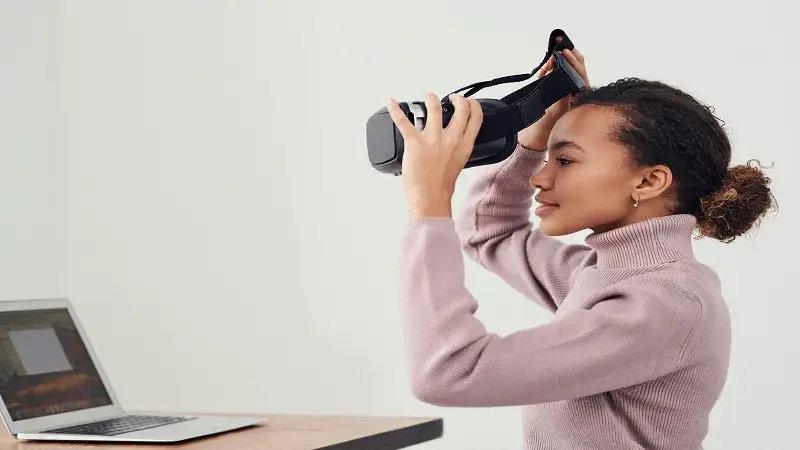
VR has been changing the game in tech. The way virtual reality has evolved over the last few years is insane, and honestly, it’s starting to make the line between real life and virtual life super blurry. But have you ever stopped to think about why your brain actually buys into VR like it’s real? Let’s break it down.
The power of immersion
At the core of VR is immersion—that deep, “I’m actually here” feeling. VR tech, like the Pico 4 Ultra Enterprise, messes with our senses in clever ways to trick our brains. We’re talking high-res visuals, 3D sound that moves around you, and motion tracking that reacts to your every move. The Pico 4 Ultra Enterprise, for example, has a crazy crisp 4K display and a super-wide field of view. Basically, it’s so realistic that your brain says, “Yep, this is real,” even though you’re still standing in your living room. And it’s not just about looking real—your brain feels like it’s part of the world you’re seeing.
Interactivity makes it real
It’s not just about how things look; it’s about how you interact. VR gets way more convincing when you can pick stuff up, move it around, or mess with the environment like you would in real life. That’s where controllers come in, and the Pico 4 Ultra Enterprise nails it with super intuitive controls. You grab a virtual ball or flip a virtual switch, and your brain says, “Okay, this is legit.” The more naturally you can interact, the more your brain starts treating the VR environment like it’s real. It’s wild how quickly your mind adapts to these cues.
Feeling “present” in VR
Presence is a big deal in VR—the sensation that you’re actually inside the environment. It’s that magical feeling of “I’m here, not there.” But here’s the catch: any hiccup, like laggy visuals or delayed controls, instantly reminds your brain that it’s fake. That’s why seamless performance is key. If everything moves and reacts like it should, your brain keeps buying the illusion. VR isn’t just a tech trick—it’s literally fooling your senses into thinking you’re somewhere else.
The VR sickness challenge
Even with all the tech improvements, VR sickness is still a thing. Some people get dizzy, nauseous, or disoriented after a while, and that’s usually because the brain gets mixed signals. Your eyes might be seeing movement, but your body isn’t feeling it the same way. Developers are constantly tweaking motion tracking, frame rates, and display tech to cut down on these symptoms. It’s getting better, but it’s something VR users should be aware of.
Where VR is headed
Looking forward, VR’s future is insane. The potential beyond just gaming. Think about entertainment, education, training. Even remote work. With more people working or learning from home, VR gives a way more immersive alternative to staring at a flat screen. The tech keeps improving. It makes these virtual environments more lifelike by the day. Soon, your brain won’t just “believe” VR is real—it’ll react to it like it’s actually there.
VR, powered by tech like the Pico 4 Ultra Enterprise, isn’t just cool—it’s reshaping how we experience the world. It’s messing with our senses in ways that feel real, even if we know it’s not. The more immersive and interactive the experience, the more our brains fall for it. And as the tech keeps leveling up, that line between real and virtual is just going to keep fading.